Servant of the underworld

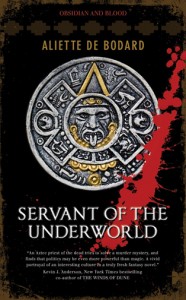
ServantUnderworldQue Aliette de Bodard es una de mis escritoras favoritas no es ningún secreto. Hasta ahora sólo había leído su ficción corta (reseñas aquí y aquí) y su novella On a red station, drifting. Confiaba en que su «Servant of the Underworld» no me decepcionara y mis expectativas se han visto incluso superadas.

Aunque mis principales pasiones literarias sean la ciencia ficción y la fantasía, también me gusta el noir y algo de novela histórica, y en este libro se mezclan todos estos géneros de manera muy efectiva.

La historia se centra en Acatl, High Priest of the Dead (cabeza visible del culto al Dios de los Muertos) que es el encargado de investigar en la ciudad de Tenochtitlan los delitos que tengan que ver con la magia. Acatl no deseaba este puesto, preferiría vivir como prelado en algún otro recóndito lugar porque las luchas políticas no le interesan, pero tal vez por esto se le escogió para el cargo.

Se le encomienda la investigación de la desaparación de Eleuia, sacerdotisa de la diosa de la fertilidad Xochiquetzal. En el lugar de la desaparación, se ha encontrado bañado en sangre y ha sido acusado del crimen el guerrero jaguar Neutemoc, hermano de Acatl. La relación con Neutemoc nunca ha sido fácil pero ello no es óbice para que Acatl se dedique en cuerpo y alma a la resolución del caso. Pero la madeja se irá complicando conforme avance la trama, hasta descubrir un complot que puede cambiar el mundo.

Este planteamiento que podría parecer poco original (las rencillas familiares que se interponen en una investigación, la desaparación que no se sabe si ha sido secuestro o asesinato porque no se encuentra el cadáver) no lo es en absoluto por el maravilloso entorno en el que se desenvuelven los personajes. La historia y mitología azteca, una gran desconocida para mí, constituyen un escenario atrayente que hace que se despierten mis ganas por conocer más del tema. Los dioses de nombre impronunciables (se me ocurren pocas cosas más difíciles que leer en voz alta un Dramatis Personae del libro sin que se trabe la lengua) compiten por la adoración de los mortales, la magia está inextricablemente ligada a los sacrificios de sangre viva que si es humana mejor que mejor, las intrigas políticas y las luchas de poder están a la orden del día, extrañas criaturas atacan a los humanos para alimentarse de sus ojos y sus uñas…

La trama está plagada de detalles que hacen que te metas en el libro, como las maldiciones que lanza Acatl cuando las cosas no salen bien (¡Que la Dualidad te ciegue!), la magia del jaguar de los nacidos en unos determinados días que permiten invocar a esta criatura, la descripción de los frescos de las paredes y muchas cosas más.

Si con todo esto no he conseguido convencerte para que empieces a leer «Servant of the Underworld» no sé cómo podría hacerlo, pero si te pica la curiosidad, aquí Aliette nos deja unos apuntes sobre el mundo azteca escenario de estos libros. Para ir abriendo boca para cuando lo publique RBA.

Premios Nébula 2012

Se han anunciado los agraciados con los premios Nebula. Son los siguientes:

Novela

  • 2312, Kim Stanley Robinson (Orbit US; Orbit UK)

Novella

  • After the Fall, Before the Fall, During the Fall, Nancy Kress (Tachyon)

Novelette

  • “Close Encounters”, Andy Duncan (The Pottawatomie Giant & Other Stories)

Relato corto

  • “Immersion”, Aliette de Bodard (Clarkesworld 6/12)

Ray Bradbury Award for Outstanding Dramatic Presentation

  • Beasts of the Southern Wild

Andre Norto n Award for Young Adult Science Fiction and Fantasy Book

  • Fair Coin, E.C. Myers (Pyr)

Carl Sagan y Ginjer Buchanan recibieron los Solstice Awards, y Michael H. Payne recibió el Kevin O’Donnell Jr. Service to SFWA Award.

¡Enhorabuena a los ganadores! Especialmente a Aliette, que nos concedió esta entrevista.


Premios Aurealis

Hoy se han anunciado los resultados de los premios Aurealis, concedidos en Australia.

  • Ficción infantil (principalmente palabras): Brotherband: The Hunters de John Flanagan (Random House Australia)
  • Ficción infantil (principalmente imágenes) : Little Elephants de Graeme Base (autor e ilustrador) (Viking Penguin)
  • Historia corta juvenil: “The Wisdom of the Ants” de Thoraiya Dyer (Clarkesworld)
  • Novela juvenil : empate: Dead, Actually de Kaz Delaney (Allen & Unwin) y Sea Hearts de Margo Lanagan (Allen & Unwin)
  • Novela gráfica: Blue de Pat Grant (autor e ilustrador) (Top Shelf Comix)
  • Colección: That Book Your Mad Ancestor Wrote de K. J. Bishop (autopublicada)
  • Antología: The Best Science Fiction & Fantasy of the Year Volume 6 edited de Jonathan Strahan (Night Shade Books)
  • Historia corta de horror: “Sky” de Kaaron Warren (Through Splintered Walls, Twelfth Planet Press)
  • Novela de horror: Perfections de Kirstyn McDermott (Xoum)
  • Historia corta de fantasía: “Bajazzle” de Margo Lanagan (Cracklescape, Twelfth Planet Press)
  • Novela de fantasía: Sea Hearts de Margo Lanagan (Allen & Unwin)
  • Historia corta juvenil de ciencia ficción: “Significant Dust” de Margo Lanagan (Cracklescape, Twelfth Planet Press)
  • Novela de ciencia ficción: The Rook de Daniel O’Malley (Harper Collins)
  • Peter McNamara Convenors’ Award for Excellence: Kate Eltham
  • Kris Hembury Encouragement Award: Laura Goodin

¡¡Enhorabuena a los ganadores!!

Prix Imaginales

logoHan sido anunciados los ganadores de los Prix Imaginales, consagrados a la fantasía en Francia.

Novela en francés
Gabriel KATZ, Le Puits des mémoires (Scrinéo)

Novela extranjera
Brandon SANDERSON, L’Alliage de justice (Orbit)

Juvenil
Patrick NESS, Quelques minutes après minuit (Gallimard)

Relato corto
Sylvie MILLER et Philippe WARD, Un privé sur le Nil, recueil (Critic)

Ilustración
Amandine LABARRE, por la portada de Porcelaine d’Estelle FAYE (Les Moutons électriques)

Cómic
Wilfried LUPANO & Jean-Baptiste ANDREAE, Les Aventuriers du temps perdu (Vents d’Ouest)

Premio Especial del Jurado
Editions Aux forges de Vulcain, por la primera traducción al francés de las novelas de  William MORRIS : Le Lac aux îles enchantées, La Route vers l’amour (Le Puits au bout du monde, 1)

¡Enhorabuena a los ganadores!

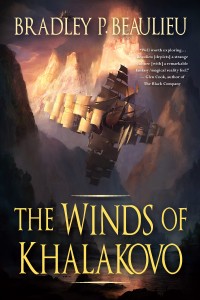
The winds of Khalakovo

WindsofKhalakovoConocí este libro gracias a que el autor Bradley P. Beaulieu puso a disposición de los posibles votantes a los Hugo su continuación, «The Straits of Galagesh» y cuando me puse en contacto con él me ofreció ambos para poder hacerme una idea completa de la obra.

La ambientación de esta trilogía fantástica es muy llamativa. Unos archipiélagos rodeados de mares inhóspitos, con una estructura feudal similar a la Rusia zarista (con un Gran Duque en vez de un Zar) y unos impresionantes barcos que navegan por el éter. Todo esto aderezado con un sistema de magia complejo, una plaga que ataca a las cosechas y a las personas sin hacer distinción e intrigas políticas de gran calado. A priori, parece muy interesante y lo es, pero a veces resulta  difícil seguir las tramas.

En este extenso libro los puntos de vista se alternan entre tres personajes: Nikandr, hijo del duque de Khalakovo, Atiana, su prometida hija de otro duque rival y Rehada, su amante de clase baja que pertenece a un grupo, los Maharraht, que se rebela contra el poder establecido. Aunque la trama gira en torno a Nikandr, los personajes femeninos son mucho más interesantes. A mí me ha gustado especialmente Atiana, porque Rehada lleva a cabo una acción al principio del libro que soy incapaz de perdonarle.

El conflicto se desencadena cuando el Gran Duque, de visita en los dominios de Khalakovo para reunirse con el resto de la nobleza, muere víctima de un ataque de un espíritu del viento que se cree ha sido invocado por los Maharraht. Aprovechando la ocasión los duques culpan de la conspiración a Nikandr y su familia. La clave de todo puede tenerla Nasim, un joven extraño que se encuentra a caballo entre dos mundos sin pertenecer a ninguno y que tiene una conexión especial con Nikandr.

Aunque es la primera de una trilogía, la novela se cierra de una forma satisfactoria y deja ver atisbos de lo que se narrará en la continuación, pero sin dejar colgado al lector en espera de la siguiente entrega.

Me gustaría resaltar el gran trabajo que ha realizado el autor en los complementos de sus libros, como este mapa interactivo que al consultarlo facilita el posicionamiento dentro de la historia.

De una forma similar a la que utiliza Steven Erikson, Bradley nos sitúa en mitad de la acción sin tener muy claro el contexto y eso ya es un pequeño handicap para la lectura, aunque hacia la mitad de libro ya nos familiaricemos con la terminología rusa un pequeño glosario como éste no hubiera estado nada mal. Del mismo modo, para alcanzar a comprender la magia de este mundo se requiere un esfuerzo activo por nuestra parte, ya que los dos grandes sistemas de magia presentados: las Matri y las invocaciones de elementales, no son explicados en detalle.

Obviando esta posible confusión y ciertas dificultades con el ritmo de la novela, achacables quizá al hecho de ser la primera de este autor, la lectura de Winds es recomendable, ya que nos alejamos algo del camino trillado de la fantasía ubicada en una época pseudomedieval europea. Es por esto que no dudé en apoyar su proyecto en Kickstarter para autopublicar el tercer libro de la trilogía.

Interview with Aliette de Bodard

mail.google.comAs you may know, Aliette de Bodard has become one of my favorite writers and I have reviewed her awesome On a red station, drifting, and some of her short fiction here y here. She has been so kind and has answered some questions that I post here. También puedes leer esta entrada en español.
How and when did you decide to start writing? Other than Orson Scott Card and Ursula K. Le Guin, which authors have influenced you? Is there any current writer that you admire?
I started writing when I lived in London in my teens: I wrote a couple of novels that would probably be very embarrassing if I read them today (thank God I lost one of them when we moved back to Paris, which taught me a very important lesson about backups, and very conveniently erased all evidence of how cringe-inducing my writing used to be!). It took me a couple of novels before I started taking the whole thing seriously–in the sense of actually polishing and submitting writing regularly.
I have been very heavily influenced by the stuff I read as a child (like most people I suppose), which included Chinese and Vietnamese fairytales; you can find the motifs and the characteristics of those all over my fiction.
The other influences on my work are the people who showed me that you could use the English language to create beautiful texts–the first one was Patricia McKillip, but there’s also a whole bunch of poets from Rabindranath Tagore to Wilfred Owen to Du Fu who taught me all kinds of things about the importance of beats and rhythm, and the power of well used alliterations.
Currently, writers I admire include Tricia Sullivan, Rochita Loenen-Ruiz and Yoon Ha Lee –they write SFF which pays attention to the nuances of characters and culture, and which really transports you to different places.
How do you cope with your day-time job and your writing?

No idea 🙂 I try to write in the holes left by the dayjob, which includes lunch-breaks, evenings and the occasional weekend (my poor husband has become used to the idea that some evenings I just turn on the computer and work non-stop while he’s playing videogames).

Comicbook industry is very important in France, have you thought about writing a comic? Which are you favorite comics?


To be honest, I have never thought of writing a bande dessinée; it’s a medium I like but don’t really see myself working in right now; it’s very different from writing prose! My favourite band dessinées currently are Juan Díaz Canales and Juanjo Guarnido‘s Blacksad, which combines the tropes of noir with awesome renditions of its main characters as animals; and Denis Bajram‘s Universal War One, a story set in the near future which deals with the mysterious appearance of a black wall beyond Saturn, which cuts the solar system in two–and shows us how a squad of disgraced soldiers investigate the phenomenon. It is about one of the only time-travel stories that I felt worked, even though I have some issues with the way it depicts women.
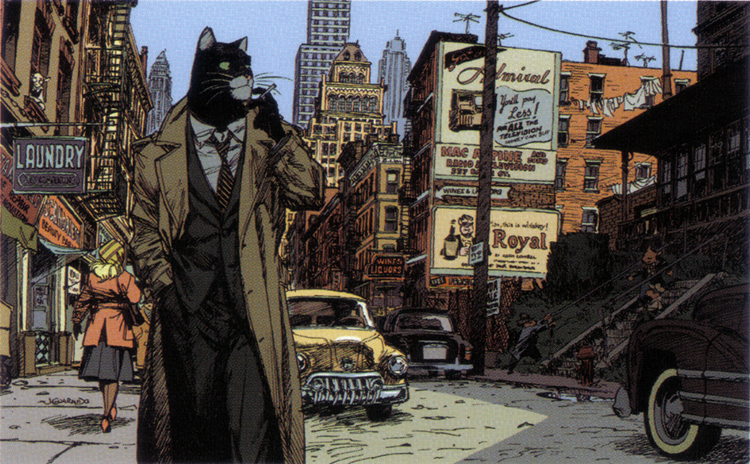
blacksad-ny-70x100-web

I also read a lot of manga; again, though I have issues with its treatment of women, I enjoyed Full Metal Alchemist, which, in addition to having a great ensemble cast, had great worldbuilding, and tackled interesting questions about war and guilt.

How do you document yourself? Where do you search for inspiration? Why is History so important in your writings?


Uh. It depends a lot on what I’m trying to write. I don’t really know where I search for inspiration–it would make my fiction much easier to write if I did know 🙂 I usually document myself on historical periods for pieces set in historical times: for my Obsidian and Blood books, I had a lot of books on the Aztec civilisation in addition to JSTOR articles. Other times, I look up science details on the internet (or ask my husband, who very kindly puts up with all my weird ideas!). The big advantage to having had a general science education is being able to quickly look things up and get what I need by a glance at the relevant pages (I don’t really know about planetary movements in detail, but I do know enough about the mechanics of celestial bodies to be able to make sense of a general interest article).

Does your passion about mithology extend to Greek, Nordic and other mithologies?


I find mythologies to be fascinating from a purely «dry» point of view as a writer, because they reveal so much of the beliefs of the culture; but of course they’re also living things with beings that are still worshipped and respected. Ancient Greek myths, by now, have become a bedrock of Western civilisation (though the versions I learnt at school probably don’t have much to do with the ones told/preserved in Greece today); I have to admit I am a bit saturated on them by now, mainly because I overdosed on them when I was younger…

As said above–the mythologies that speak most strongly to me are Chinese/Vietnamese, because they’re the ones that I grew up most with as a child.

Do you know any Spanish writer? What do you think about the publication of Obsidian and Blood in Spanish? Would you like a particular short story of yours to get translated?


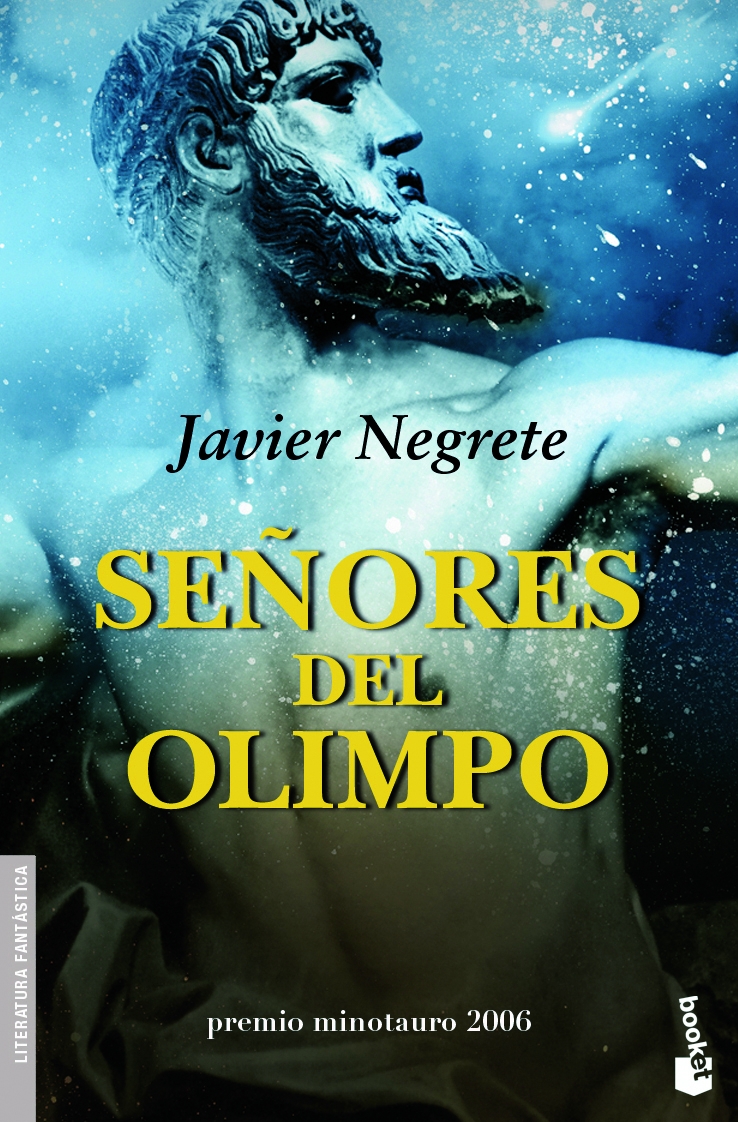
I know a few Spanish writers, though I’m woefully under-read in that area due to very rusty language skills… I’m slowly working my way through Javier Negrete at the moment. I’m a tenth of the way through Señores del Olimpo, which I peruse when I have a stress-free momentI rather like the retelling of Greek myths: it has the advantage of being familiar, which is a huge help when reading in a language I don’t speak that well–and I hope to get around to La Espada de Fuego, which is also on my shelves. senores-del-olimpo
I’m thrilled to be published in Spanish by RBA–there’s a special satisfaction to being published in a language I can sort of understand (I’m not going to be near enough proficient to understand every nuance of the translation, but at least I’ll be able to read it!).

I have no particular short story I want translated into Spanish; though I admit that I would love stuff from the Xuya cycle to be translated, as I have a special fondness for those stories.

What are your opinions about the situation of women in genre fiction?


Recently, Tricia Sullivan posted a link to a 1982 article on women in SFF (http://www.nytimes.com/1982/05/02/books/women-and-science-fiction.html?pagewanted=all). On the one hand, it was really nice to see that we’d made strong progress–that you find more women on awards list and in bookstores. On the other hand… the opinions expressed in the article don’t seem to have really gone away. It’s still assumed that women can’t write SF–or its counterpart, that what women write isn’t SF (which is a great exclusionary tactic that I also see applied to the work of POCs, particularly the non-Western Anglophone contingent). I think we’re slowly getting better at including women, and this is a very good thing! But I also think that we (as a genre, and as someone who is steeped in it I’m equally guilty of this attitude–it’s hard to reject a milieu you’re swimming in) like to congratulate ourselves on being more inclusive than we really are–and that this is a dangerous attitude to have, because it encourages complacence.

Do social networks influence your work as a writer and your relationship with readers? And with other authors? What can you tell us about Written in blood?


Without social networks, I don’t think I’d have got where I am–when you’re a non-Anglophone writer living in a non-Anglophone country and trying to write in English, it’s really hard to find peers unless it’s through the Internet. I don’t have a face-to-face writers’ group, and a lot of my English-speaking friends live at least a country away, if not a continent away–email and social networks are really handy for me to reach out, and also to be reached by readers. Same with other authors–I know a lot of them via email or twitter or facebook, often years ahead of actually meeting them at conventions.

Written in Blood is my online writers’ group–they very nicely put up with all three Obsidian and Blood books, with my novella On a Red Station, Drifting and with a lot of my short fiction (they’re not my only critique group, because I binge-write a lot, and I would flood them with my stuff if everything had to go through them!). They’ve been an invaluable help with critiques, query letters and the ups and downs of my writing life; and of course great friends to hang out with.

Do you reach the keyboard with your growing belly?

Easily–all I have to do is wedge the laptop on my knees and I’m doing fine 🙂

I want to thank Aliette again for her answers and suggest you to read her books.