Nueva entrega de los pasatiempos de Fantástica Ficción.
Domnall and the Borrowed Child
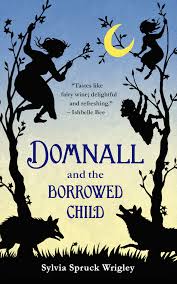 Dentro de la nueva línea de Tor de novelas cortas, se va a publicar Domnall and the Borrowed Child de Sylvia Spruck Wrigley.
He tenido la ocasión de leerla con cierta antelación y me ha parecido una historia casi canónica de las relaciones de las hadas con los humanos, pero con un pequeño giro que la hace algo más llamativa.
El protagonista es un explorador de la corte feérica. A pesar de su “inmortalidad” siente el paso de los años y habla con nostalgia sobre el pasado, cuando estaba en la cumbre de sus capacidades. Le encargan una difícil misión, tendrá que cambiar un bebé humano por un hada que está tan enferma que solo la leche materna podrá curar su dolencia. Se entregará a esta misión con todo su empeño y sus algo mermadas facultades y tendrán que resolver todas las dificultades que encuentre a su paso.
Si os suena algo tópico es porque lo es. Las historias feéricas con intercambios de niños son de lo más habitual y yo busco algo más atrevido en mis lecturas. A pesar de estar bien narrado y tener ciertos momentos narrativamente tensos, al final queda como una historia más que no nos dejará huella.
Película basada en Little brother
Paramount ha adquirido los derechos para llevar a la gran pantalla Little brother de Cory Doctorow.
No hay mucho más información sobre el tema pero la idea es crear una franquicia de films para adolescentes basándose en la obra del canadiense, que ya tiene secuela con Homeland.
Libro gratis : Extras de John Scalzi
Como parte de la campaña de marketing asociada al lanzamiento de The end of all things de John Scalzi, en la web de Tor se puede descargar un archivo con extras asociados a este libro. Aquí os pongo la descripción del propio Scalzi:
The End of All Things took me longer to write than most of my books do, in part because I had a number of false starts. These false starts weren’t bad—in my opinion—and they were useful in helping me figure out what was best for the book; for example, determining which point-of-view characters I wanted to have, whether the story should be in first or third person, and so on. But at the same time it’s annoying to write a bunch of stuff and then go Yeaaaaah, that’s not it. So it goes.
Through various false starts and diversions, I ended up writing nearly 40,000 words—almost an entire short novel!—of material that I didn’t directly use. Some of it was recast and repurposed in different directions, and a lot of it was simply left to the side. The thing is when I throw something out of a book, I don’t just delete it. I put it into an “excise file” and keep it just in case it’ll come in handy later.
Like now: I’ve taken various bits from the excise file and with them have crafted a first chapter of an alternate version of The Life of the Mind, the first novella of The End of All Things. This version (roughly) covers the same events, with (roughly) the same characters, but with a substantially different narrative direction.
In an alternate universe, an alternate version of me went ahead with this version, and The End of All Things ended up being a rather different book. Which would be cool. I’d like to meet up with that John Scalzi and trade books.
Please note: This version of the story is noncanonical and mildly spoilery for the version that is, in fact, canonical. While you don’t have to read the official version of The Life of the Mind to read this (or to enjoy it), I recommend that you do to fully appreciate the compare and contrast.
Also, this version ends on a bit of a cliff-hanger. Which will never be resolved. Sorry about that.
Enjoy!
Guest Post : Writing the novel of my heart
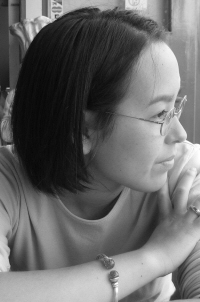 Hoy tenemos el honor de recibir la visita de Aliette de Bodard, que ha escrito un post especial sobre su nueva novela The house of shattered wings. Después podéis leer la traducción que he pergeñado (pido disculpas por adelantado).
Writing the novel of my heart, or why I nuked Paris
The House of Shattered Wings started as a very different novel.
Originally, I sat down in 2011 or 2012 with my agent, and we discussed projects I wanted to take forward. The one we ended up agreeing on as the most sellable was a urban fantasy set in Paris: I loved the subgenre, but felt I wanted to set it somewhere different (and in any case didn’t feel qualified to set it in an Anglophone country, not even in London where I’d actually lived).
Over the year that followed, I wrote a synopsis, then three sample chapters, of a fantasy set in 21st Century Paris, where rival families of magicians fought each other for influence. The main character, Hélène Roulière, was Vietnamese-French, and struggling to find her place in families mostly drawn from the upper-class aristocracy and bourgeoisie. The novel’s plot found her family under attack, and Hélène fighting to preserve her husband and children, even as her easy certainties crumbled around her.
There were a lot of familiar preoccupations in this novel: Hélène’s struggles with her heritage, the importance of homes and hearths, factions fighting each other for influence; and the deadly secrets that could weaken families, and tear them apart. On paper, it sounded like a wonderful thing. In practise, however, it never really came alive. I had several chats with friends, and with my agent, and reluctantly came to the conclusion that it wasn’t working because I didn’t really believe in this world: in particular, I couldn’t get a grip on the magic, and couldn’t believe in an essentially unchanged 21st Century with large magical factions present (I know people have done it very well, and very believably! I just couldn’t make it work for me).
Regretfully, I scrapped the entire thing, consigning it to the “drafts that didn’t work” folder on my machine. I decided I needed an entirely new setting, and an entirely new plot: something I could actually feel enthusiasm about. Hunting through the scraps folder, I found two old drafts, both novelettes. They were both set in the same universe: a city named Silverspires, where Fallen angels regularly appear, bewildered and lost in the wake of leaving Heaven; and are mercilessly hunted for the magic in their bones. The main character, Samantha, teamed up with a Fallen named Caliel, and attempts to take new Fallen to safety before they are hunted down and killed. Silverspires itself was a sort of dreamy cross between 19th and 20th Century, with silver bullets and mobile phones on the one hand, and on the other Irish immigrants and tenements straight out of Charles Dickens.
The stories were only half-finished–one literally stopped mid-sentence, as a main character got mortally shot (at that point it was 12000 words long, and I must have got discouraged I would never sell it). I toyed with taking them up again, but again I felt there was something missing; something which didn’t quite click for me. I (bravely) decided to set aside the novel problem for now, and focus on writing short fiction.
A couple of months later, I was visiting fellow writer Rochita Loenen-Ruiz in the Netherlands, and discussing the novel I was attempting to write. I mentioned my Silverspires stories, and Rochita looked at me long and hard before saying, “you know, this would totally make an awesome novel, and there’s no reason why it couldn’t take place in Paris”.
I felt as though lightning has struck me between the eyes.
Of course. Of course it wasn’t Silverspires I wanted, but Paris: a wildly different city where magic ruled and Fallen angels tumbled from the sky, where life was dangerous and short but still worth living and clinging to; and where Great Houses, each with their own philosophy and rules, fought each other for magical dominance. I wanted familiar streets, the ones I’d grown up with all my life; the rhythm and rules of a society from the books I’d read as a child–still that weird cross between modernity and tradition, but coming from the Belle Epoque rather than the Victorian Age.
At that point, I stopped, and wondered why there would be that kind of society–and realised that the answer was that it was a 20th Century society looking back to a golden age; and that the easy reason why that would happen was because something catastrophic had happened between the Belle Epoque and the current day. From there, it seemed almost natural to introduce a magical war: instead of WWI being fought between countries, I had it fought between magical factions; and had the resulting conflagration deeply and irremediably nuke Paris, razing Notre-Dame and the Grands Magasins, and making the Seine run black with ashes and the pollution of spell residues.
And that was the beginning of The House of Shattered Wings. Of course, there was still a lot of work: figuring out the magical factions and why they’d got there, how the history and geography of the city had changed, and doing some general worldbuilding and cleaning up (to take just one example, the mobile phones were incompatible with the devastated city and its lack of infrastructure, but it took me two drafts and gentle prodding from my agent to realise this). And then I needed an actual plot where things happened…
The resulting novel is a composite of both these attempts, and I can still clearly see bits and pieces of both: the families have become Houses, but the intrigues between magical factions still take centre stage; one character, Philippe, is Vietnamese, and as out of place as Hélène was in the urban fantasy. Silverspires became a House rather than a city; the drug made from Fallen bones was renamed angel essence, and characters from the Silverspires short stories (Lucifer Morningstar, Asmodeus) were lifted wholesale and twisted slightly sideways to make them fit in this new universe. But equally, it’s a novel and a setting that is now totally its own thing, with its own rules, own internal consistency, and a universe that felt to me like it was breathing and living, and one I could comfortably set a novel into.
And the moral of this story is: in case of doubt, one should always nuke Notre-Dame!
Escribiendo la novela de mi corazón, o por qué bombardeé París
The House of Shattered Wings empezó como una novela muy diferente.
En sus comienzos, me senté en 2011 o 2012 con mi agente, y hablamos sobre los proyectos que quería afrontar. Acabamos poniéndonos de acuerdo en que el más “vendible” sería una fantasía urbana situada en París: me encanta el subgénero, pero quería ubicarlo en un sitio distinto (de todas formas, no me sentía preparada para localizar la novela en un país anglófono, ni siquiera en Londres donde había vivido).
Durante el año siguiente, escribí una sinopsis y capítulos de ejemplo de una fantasía situada en un París del siglo XXI, donde familias de magos rivales se enfrentaban entre ellas para conseguir el poder. El personaje principal, Hélène Roulière, era una franco-vietnamita que luchaba para encontrar su lugar en estas familias de la alta aristocracia y burguesía. La trama de la novela se basaba en un ataque a su familia ante el que Hélène intentaba preservar a su marido y familia, mientras sus certezas se derrumbaban.
Había muchas preocupaciones familiares en esta novela: la herencia de Hélène, la importancia de los hogares y los corazones, facciones que se enfrentan una a otra para conseguir poder y los secretos mortales que pueden debilitar a las familias y destrozarlas. Sobre el papel, sonaba muy bien. En la práctica, sin embargo, nunca llegó a realizarse. Hablé muchas veces con amigos y con mi agente, y reticentemente llegué a la conclusión de que no funcionaba porque no creía en ese mundo: en particular, no me creía la magia y el hecho de que el siglo XXI no hubiera cambiado apenas incluso con grandes poderes mágicos presentes (conozco gente que lo ha hecho y muy bien pero para mí simplemente no funcionaba).
A regañadientes, me deshice de todo, guardándolo en la carpeta “borradores que no funcionaron”. Decidí que necesita un escenario totalmente nuevo así como una trama totalmente nueva: algo que me entusiasmara. Rebuscando en esta carpeta, encontré dos borradores antiguos, dos novelettes. Ambos estaban situados en el mismo universo: una ciudad llamada Silverspires, donde ángeles Caídos aparecen regularmente, asombrados y perdidos al despertar fuera del Cielo; son perseguidos sin misericordia por la magia de sus huesos. El personaje principal, Samantha, forma un equipo con un Caído llamado Caliel e intenta salvar a un nuevo Caído antes de los capturen y los maten. Silverspires en sí misma era un cruce soñado entre los siglos XIX y XX, con balas de plata y teléfonos móviles por un lado y por el otro lado inmigrantes irlandeses y suburbios directamente sacados de Charles Dickens.
Las historias estaban a medio hacer – una de ellas literalmente se quedaba en mitad de una frase, porque un personaje principal recibía un disparo mortal (en ese momento tenía 12000 palabras, y supongo que pensé que nunca lo vendería). Jugué con la idea de empezarlas de nuevo, pero también sentía que faltaba algo; algo que no terminaba de funcionar. Decidí (valientemente) dejar de lado la novela y concentrarme en la ficción corta.
Un par de meses después, estaba visitando a mi amiga Rochita Loenen-Ruiz en los Países Bajos, hablando sobre la novela que estaba intentando escribir. Mencioné mis historias de Silverspires, y Rochita me miró largo rato antes de decirme, “sabes, esto sería una novela estupendo y no hay ninguna razón por la que no debería ocurrir en París”.
Me sentí como si un rayo me hubiera atravesado entre los ojos.
Por supuesto. Por supuesto que no quería Silverspires, quería París: una ciudad radicalmente diferente donde la magia mandaría y los ángeles cayeran del cielo, donde la vida fuera peligrosa y corta pero mereciera la pena luchar por ella; donde las Grandes Casas, cada una con su propia filosofía y reglas, se enfrentaran por el poder mágico. Quería calles familiares, esas en las que yo había crecido; el ritmo y las reglas de una sociedad de los libros que leía de pequeña – ese extraño cruce entre modernidad y tradición, pero partiendo de la Belle Epoque en vez de la era victoriana.
En aquel momento me paré y me pregunté por qué se habría creado ese tipo de sociedad- y me di cuenta de que la respuesta estaba en la sociedad del siglo XX mirando atrás a una edad de oro; y la razón por la que esto ocurriría sería sencilla : algo catastrófico habría sucedido entre la Belle Epoque y el presente. Desde ahí, parecía casi natural introducir una guerra mágica: en vez de que la Primera Guerra Mundial se disputara entre países, enfrenté a facciones mágicas; la conflagración resultante destrozó profunda e irremediablemente París, demolió Notre-Dame y los Grands Magasins e hizo que el Sena se volviera negro con las cenizas y la contaminación residual de los hechizos.
Y ese fue el comienzo de The House of Shattered Wings. Por supuesto, quedaba mucho trabajo: imaginar las facciones mágicas y por qué llegaron a dónde estaba, cómo la historia y la geografía de la ciudad habían cambiado, trabajos generales de wordbuilding y de limpieza… (por ejemplo, los teléfonos móviles eran incompatibles con la ciudad devastada y su falta de infraestructura, pero necesité dos borradores y un “amable aviso” de mi agente para darme cuenta). Y entonces necesité una verdadera trama donde ocurrieran cosas…
La novela resultante es una mezcla de ambos intentos, y puedo ver claramente piezas de cada uno de ellos: las familias se han convertido en casas, pero las intrigas entre ellas siguen siendo primordiales, una personaje, Philippe, es vietnamita, y está tan fuera de lugar como Hélène lo estaba en mi fantasía urbana. Silverspires se transformó en una casa en vez de una ciudad, la droga hecha a partir de huesos de Caídos la renombré como angel essence, e importé algunos personajes de las historias cortas de Silverspires (Lucifer Morningstar, Asmodeus) tal cual con pequeños cambios para adaptarlos al nuevo universo. Pero del mismo modo, es una novela y un escenario totalmente distintos, con sus propias reglas, su propia consistencia interna y un universo que me parecía vivo, en el que podía acomodar la historia.
La moraleja de la historia es: en caso de duda, ¡destrozar Notre-Dame!
Sopa de letras 12
Nueva entrega de los pasatiempos de Fantástica Ficción.
The republic of thieves
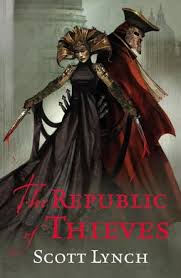 Estoy segura de que no soy la única persona que quedó totalmente fascinada por Las mentiras de Locke Lamora. La carta de presentación de Scott Lynch aunaba una trama interesante con unos personajes arrebatadores, y era un extraordinario comienzo para una saga de siete volúmenes previstos.
Aunque Red seas under red skies, la segunda entrega, perdía algo de fuelle, no por eso dejaba de ser una lectura muy entretenida.
Se esperaba con mucha expectación la aparición de The republic of thieves en el 2013, pero lo cierto es que cuando se publicó la respuesta popular no fue la esperada. Tras haber leído el libro, lo entiendo perfectamente.
La tercera entrega de la saga de los Caballeros Bastardos es un libro de relleno. Como tal, es perfectamente disfrutable, pero no consigue emocionar como ese brillantísimo primer hito que fue Las mentiras de Locke Lamora y es una lástima.
Es una lástima porque tenía los elementos necesarios para una historia sobresaliente. Para empezar, por fin conocemos a Sabetha, que fue una presencia constante en toda la vida de Locke pero de la que apenas conocíamos nada.
Es un lástima porque Lynch se enreda en una narración con dos líneas temporales, el pasado y el presente que a veces se le escapan de las manos, porque se desequilibran una a otra. Combina episodios muy cortos de una con otros más largos y el relato queda descompensado.
Y es una lástima porque la relación entre Locke y Sabetha que debería servir como base para toda la historia es tan tormentosa e ilógica que lo que en un principio puede parecer divertido, con constantes pullas y enfrentamientos intelectuales, acaba por resultar cansado de leer.
No todo es negativo en el libro, que es indudablemente divertido aunque no colme mis expectativas. Los timos a gran escala que preparan los protagonistas, inmersos en una carrera por amañar unas elecciones sin duda son de lo más curioso. Se ve que trampear con los votos es algo atemporal. Y las revelaciones que se hacen sobre el pasado de los personajes no hacen si no incrementar nuestro interés por su futuro.
Sin duda el autor deja el terreno preparado para las siguientes novelas, donde volveremos a encontrarnos a Jean y a Locke, y suponemos que a Sabetha enfrentados a una oscura figura del pasado. Lo malo es que no sé si el camino habrá merecido la pena.
Contenidos de The mammoth book of kaiju
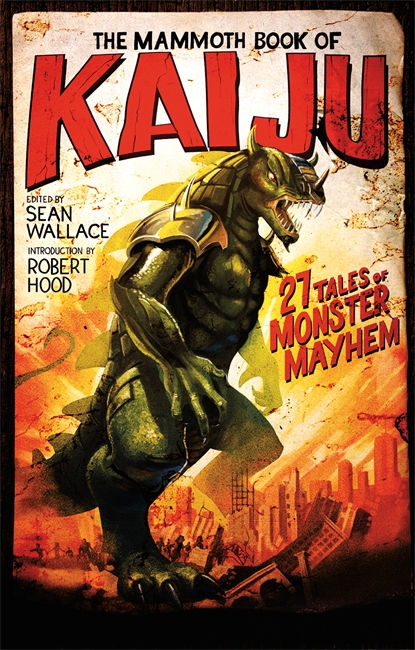 Sean Wallace ha anunciado los relatos que formarán parte de The mammoth book of kaiju, son los siguientes:
“Softly Spoke the Gabbleduck” de Neal Asher
“Occupied” de Natania Barron
“Now I Am Nothing” de Simon Bestwick
“The Black Orophant” de Daniel Braum
“Attack of the 50-Foot Cosmonaut” de Michael Canfield
“Postcards from Monster Island” de Emily Devenport
“Seven Dates That Were Ruined de Giant Monsters” de Adam Ford
“The Lighthouse Keeper of Kurohaka Island” de Kane Gilmour
“Kungmin Horangi: The People’s Tiger” de Cody Goodfellow
“The Island of Dr. Otaku” de Cody Goodfellow
“With Bright Shining Faces” de Gini Koch
“One Night on Tidal Rig #13” de Tessa Kum
“Running” de Martin Livings
“The Unlawful Priest of Todesfall” de Penelope Love
“Breaking the Ice” de Maxine McArthur
“The Eyes of Erebus” de Chris McMahon
“Kaiju” de Gary McMahon
“Whatever Became of Randy?” de James A. Moore
“Kadimakara and Curlew” de Jason Nahrung
“Frozen Voice” de An Owomoyela
“Mamu, or Reptillion vs Echidonah” de Nick Stathopoulos
“Cephalogon” de Alys Sterling
“Show Night” de Steve Tem
“Titanic!” de Lavie Tidhar
“The Kansas Jayhawk vs. The Midwest Monster Squad” de Jeremiah Tolbert
“The Behemoth” de Jonathan Wood
“Love and Death in the Time of Monsters” de Frank Wu
Otra cosa no sé, pero el libro promete ser divertido.
Binti
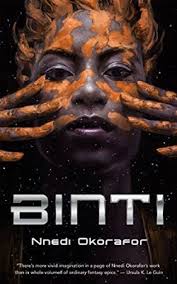 Hay gente que tiene un don para escribir y hay gente que no. Un hecho tan simple como ver unas medusas (algo que sin duda nos habrá pasado a más de uno en verano en la playa) inspiró a Nnedi Okorafor a escribir esta bella historia de ciencia ficción.
Los aspectos que afloran en el relato de Okorafor son muy variados: el enfrentamiento entre tradición y modernidad, el miedo a lo extraño e incomprensible a lo que solo sabemos responder atacando, la opresión de los pueblos dominados y la subyugación de su cultura… Muy en el tono de las historias sobre la diversidad cultural de We see a different frontier, una colección poco conocida que merece mayor repercusión.
La protagonista de la historia es sencillamente fascinante. Binti pertenece a la tribu de los Himba, muy apegados a sus orígenes. Tanto, que cuando recibe la oportunidad de estudiar en una prestigiosa Universidad de otro mundo, sus padres se niegan. Abandonar el pueblo significa abandonar la familia, convertirse en una descastada. Tanto da que quiera poner al servicio de la cultura sus extraordinarias capacidades matemáticas, si se aleja de su hogar quedará marcada para siempre. Y sin embargo, el relato comienza con su huida, dejando atrás todo aquello que conoce para sumergirse en lo desconocido.
Esta cruel decisión que debe tomar desencadenará una serie de acontencimientos que Okorafor nos mostrará de una forma muy acertada. Los diálogos son escasos, tienen más importancia los propios pensamientos de la protagonista, a la que vemos enfrentarse a situaciones extremas con valor y con lógica, con el conocimiento de sus antepasados.
Y es que Binti consigue aunar una cultura milenaria existente en la Tierra con un espacio habitado por distintas razas sin que haya ninguna disonancia, sin que nos extrañe.
Es sorprendente que en tan pocas páginas se consiga contar tanto. Me parece un acierto su publicación en Tor, en su nueva colección de novelas cortas. Yo pienso seguirla muy de cerca.
Sopa de letras 11
Nueva entrega de los pasatiempos de Fantástica Ficción.