Knocking on Hugo’s door

Una de las cosas interesantes que nos deja la ceremonia de los Hugo y que quizá pasan desapercibidas para el gran público son las estadísticas del premio. En concreto me llaman mucho la atención los textos que se quedaron a las puertas de ser finalistas en los Hugo y que, por muy pocos votos a veces, no son seleccionados.

En la categoría de novela, por ejemplo, por 17 votos se quedó fuera “Monster Hunter Legion” desconocida para mí, pero que parece tener toda una legión de seguidores. Más atrás quedaron “Existence”, “The hydrogen sonata”… obras que al menos a mí me llaman más la atención que las que finalmente lo consiguieron. Me parece una sonada ausencia “Jack Glass” ganadora del BSFA este año y que no aparece ni entre las 15 primeras.

En novella, “On a red station, drifting” consiguió entrar por 7 votos de diferencia con la siguiente y el premio final lo ha conseguido Brandon Sanderson con su “The emperor’s soul” de forma muy reñida con Mira Grant. Atrás quedaron “The boolean gate”, “Legion” (desestimada por el propio autor) y “All the flavors” de Ken Liu, todas recomendables aunque este año la categoría de novella ha estado muy bien representada.

En novelette es curioso como por un solo voto entró “Rat-Catcher” mientras que “The waves” de Liu quedó fuera. Ken ha estado se ha quedado a punto de entrar en muchas categorías, pero la que más suya se puede considerar, el relato corto, no se le escapa. Me hubiera gustado que hubiera entrado “Astrophilia” a solo dos votos del último puesto.

En short story al final nos quedamos solo con tres representantes debido a la extraordinaria dispersión del voto, algo que quizá debería tenerse en cuenta para futuras ediciones, pues no parece muy justo que por 4 votos entre una obra y otra se desestime.

Por último, me gustaría comentar un hecho curioso. El sistema de votación de los Hugo hace que aunque una persona u obra sea muy nominada no significa que luego sea muy votada. Por ejemplo, “Fade to white” de Valente fue la más nominada en su categoría pero luego quedó tercera.

¿Alguna otra curiosidad que veais en las estadísticas?

Ganadores premios Parsec

Este fin de semana se han anunciado los  ganadores de los premios Parsec. Aquí puedes consultar la lista de nominados.

Best Speculative Fiction Story: Small Cast (Short Form) / Mejor historia de ficción especulativa (Formato corto)

Now Cydonia de Rick KennettBest Speculative Fiction Story: Small Cast (Novella Form) / Mejor historia de ficción especulativa : Reparto pequeño (Formato novella)

The Shadow Over Innsmouth by H.P. Lovecraft, producido por Mike Bennett

Best Speculative Fiction Story: Small Cast (Long Form) / Mejor historia de ficción especulativa : Reparto pequeño (Formato largo)

Underwood and Flinch de Mike BennettBest Speculative Fiction Story: Large Cast / Mejor historia de ficción especulativa : Reparto grande

The Road To Utopia Plain” de Rick Kennett (The Dunesteef Audio Fiction Magazine)Best Speculative Fiction Audio Drama (Short Form) / Mejor audio drama de ficción especulativa (Formato corto)

The Minister of Chance de Radio Static

Best Speculative Fiction Audio Drama (Long Form) / Mejor audio drama de ficción especulativa (Formato largo)
Star Trek: Outpost de Tony Raymond y Daniel McIntosh

Best Speculative Fiction Video Story / Mejor vídeo historia de ficción especulativa

I Have Your Heart de Molly Crabapple, Kim Boekbinder & Jim Batt

Best Speculative Fiction Magazine or Anthology Podcast / Mejor podcast de ficción especulativa como revista o antología

Tales from the Archives, Volume 2 de Tee Morris y Pip Ballentine

Best New Speculative Fiction Podcaster/Team / Mejor nuevo podcaster / equipo de podcasters de ficción especulativa
The NoSleep Podcast de David Cummings

Best Speculative Fiction Fan or News Podcast (Specific) / Mejor podcast de noticias o de fans de la ciencia ficción especulativa (Específico)

RebelForce Radio de Jimmy Mac y Jason Swank

Best Speculative Fiction Fan or News Podcast (General) / Mejor podcast de noticias o de fans de la ciencia ficción especulativa (General)

Nights at the Round Table de Ash Farbrother

Best Podcast about Speculative Fiction Content Creation / Mejor podcast sobre creación de contenidos de ficción especulativa
StoryForward de J.C. Hutchins & Steve Peters

Best Fact Behind the Fiction Podcast / Mejor podcast sobre hechos tras la ficción

Hubblecast de Oli Usher & Joe Liske

Best Speculative Fiction Comedy/Parody Podcast / Mejor podcast de comedia / parodia de ficción especulativa

Blastropodcast de Mark Soloff

Best Speculative Fiction Music Podcast / Mejor podcast de música de ficción especulativa
The Funny Music Project de Devo Spice

The boolean gate

The_Boolean_GateOtro de mis nominados a los Hugo en ficción corta que no consiguió quedar entre los finalistas es “The boolean gate”. Me gustan los relatos encuadrados en lo que se ha dado en llamar historia secreta, que busca lo desconocido en los hechos históricos y rellena estos huecos con fantasía. Uno de los mayores maestros en esta suerte de collage es Tim Powers, pero he de reconocer que Walter Jon Williams no le ha ido muy a la zaga en este caso.

A través los ojos de Sam Clemens (alter ego de Mark Twain) vemos la ajetreada vida en los Estados Unidos de finales del XIX, donde se cuajaron grandes fortunas que duran hasta nuestros días y donde los progresos de la tecnología se veían como una lucha constante entre dos intelectos privilegiados, Edison y Tesla.

Sam es amigo de Nikola Tesla, y éste le va comentando sus progresos con la electricidad, los controles remotos y la aplicación de la lógica booleana a la mecánica. Pero a Clemens le surge la duda, ¿de dónde vienen los raptos de genio del serbio?

Podría parecer que lo más interesante de la historia es el plantel de personajes famosos que van apareciendo por ella, aunque sea fugazmente, algo que al menos en mi caso hace que tenga que tirar de Wikipedia para captar los detalles que el autor deja caer. Sin embargo, lo que se ganó mi voto dentro de “The boolean gate” es el conflicto interno que sufre Sam entre su personalidad real y la inventada y cómo esto ha tenido repercusiones durante toda su vida. A pesar del amor que profesa a su esposa no puede estar con ella por indicación médica y este dolor se refleja en sus últimos escritos, pero como Mark Twain no puede dejar de ser un jocoso personaje que consigue portadas de periódicos por sus frases irónicas casi sin esforzarse. Se siente culpable por la muerte de su hijo mientras que va vestido de blanco para captar la atención de todo el que pasa a su lado. Esta dualidad podría ser otra interpretación del título, La puerta lógica, solo existe el blanco y el negro, no hay matices intermedios.

Un muy buen relato que puedes leer aquí de forma gratuita.

Primeras impresiones ganadores premio Hugo

Gracias al madrugador blog de Pedro, que ha presentado en su blog una completa lista,ya conocemos los ganadores de los Hugo, 2013. Siento mucho que Aliette no haya ganado ningún premio, pero así votaremos sus historias con más ganas el año que viene.

Os los pongo aquí con un enlace a mi comentario:

Mejor novela
Mejor novela corta
Mejor relato
Mejor relato corto
Mejor obra relacionada
  • Writing Excuses, séptima temporada. Brandon Sanderson, Dan Wells, Mary Robinette Kowal, Howard Tayler and Jordan Sanderson (web)
 Mejor historia gráfica
Mejor obra dramática, forma larga
  • Los Vengadores, Joss Whedon (Marvel Studios, Disney, Paramount)

Mejor obra dramática, forma corta

  • Juego de Tronos: «Blackwater», George R.R. Martin, Neil Marshall, David Benioff y D.B. Weiss (HBO)
 Mejor editor, forma corta
  • Stanley Schmidt (editor de Analog)
Mejor editor, forma larga
  • Patrick Nielsen Hayden (editor de Tor) (blog)
 Mejor ilustrador profesional
  • John Picacio (web)
Mejor semiprozine
  • Clarkesworld, editado por Neil Clarke, Jason Heller, Sean Wallace y Kate Baker (web)
Mejor fanzine
  • SF Signal, editado por John DeNardo, JP Frantz y Patrick Hester (web). (Tras ganarlo varias veces se retiran de posibles nominaciones para dar paso a nuevos “fanzines”)
Mejor escritor aficionado
  • Tansy Rayner Roberts (blog)
Mejor ilustrador aficionado
  • Galen Dara (web)
Mejor fancast
  • SF Squeecast, Elizabeth Bear, Paul Cornell, Seanan McGuire, Lynne M. Thomas, Catherynne M. Valente y David McHone-Chase (enlace). (Tras ganarlo dos veces seguidas se retiran de posibles nominaciones para dar paso a nuevos “fancasters”).
(Los siguientes galardones también se han entregado pero no son “propiamente” Hugos).
Premio John W. Campbell Award al mejor escritor novel

Mejor traducción (premio Seiun, otorgado por jurado japonés):

  • Paolo Bacigalupi (forma corta)
  • John Scalzi (forma larga, novela)

Premio especial de la presidencia Lonestarcon

  • Stanley Schmid (editor de Analog)

Premio honorífico (Big Heart)

  • Tom Veal

¡Enhorabuena a los ganadores!

Curiosity Shop, 1914 : El despertar

Curiosity ShopUna persona que me conoce bien me regaló este tebeo del que no sabía nada, pero que me ha parecido tan interesante como para hacerme con la segunda entrega.

La protagonista de nuestra historia es Max Prado, apodada “Curiosity”, la hija de un ingeniero recluída en un internado de Bélgica por su mala conducta. Cuando por fin vuelve a España para encontrarse con su padre, descubre que ha muerto y muchos dicen que se ha tratado de un suicidio. No obstante, Max no está conforme con esta conclusión y se lanza a investigar las pistas que le ha dejado su padre sobre un antiguo manuscrito y una máquina que interesa a los espías de las superpotencias de la época.

La trama de Teresa Valero es muy interesante, y aunque a veces puede ser algo confusa con una relectura queda claro todo el nudo de la narración.

Pero para mi gusto el punto fuerte de este tebeo es el apartado gráfico, simplemente espectacular. Montse Martín despliega unos recursos artísticos de muy alto nivel, destacando especialmente la documentación sobre la época y cómo recrea escenarios como Atocha o la calle Arenal a principios del siglo pasado. También merece la pena fijarnos en el color, donde a veces aplica una especie de filtro sepia que le va muy bien a la historia. El tratamiento de la figura humana es también exquisito. Como única pega podría decirse que la portada, a pesar de ser llamativa no da idea de lo que guarda el interior de esta pequeña joya.

Si te gustan las intrigas y el espionaje como a mí, definitivamente este tebeo tiene que caer en tus manos.

Harbinger of the storm

HarbingerEn esta segunda entrega de Obsidian and Blood de mi admirada Aliette de Bodard seguimos con las andanzas de Acatl, el Alto prelado de los muertos al que conocimos en “Servant of the Underworld”.

Los segundos libros de las trilogías siempre presentan problemas. Si asimilamos la estructura de inicio, desarrollo y desenlace con cada una de las entregas, este libro debería ser donde se profundice en la historia de Acatl y del imperio Mexica. Mi impresión es que no se debe leer de forma independiente ya que hay menciones a lo sucedido en “Servant of the Underworld” y se van añadiendo detalles a los personajes que conocimos antes.

Se notan algunos cambios con respecto al primer libro, por ejemplo, la escasa (casi testimonial) presencia de la familia del protagonista y las mayores explicaciones sobre el panteón de dioses de nombres impronunciables, algo que se agradece mucho porque es interesantísimo.

Lo que no varía son las intrigas palaciegas en las que se ve envuelto Acatl. Está en juego la sucesión del máximo mandatario del Imperio y ante semejante premio, pocos están dispuestos a echarse atrás, aunque lo que esté en peligro sea la propia existencia del mundo, acechado por los demonios de las estrellas, que vigilan anhelantes las debilidades del mundo para celebrar un festín con los humanos que caigan en sus garras.

El propio Acatl se ve cambiando, ya que tiene que aprender a ceder en sus rígidas prioridades para llegar a un consenso en el que todos ganan y todos pierden. La estrella ascendente de Teomitl podría por momentos llegar a ensombrecer al Alto prelado, pero Aliette maneja los personajes con maestría para dejar a cada uno en su lugar.

La prosa, como no podría ser de otra manera con esta autora, está cuidada al extremo, parece que cada palabra se ha seleccionado para encajar en el tapiz que forman las frases.

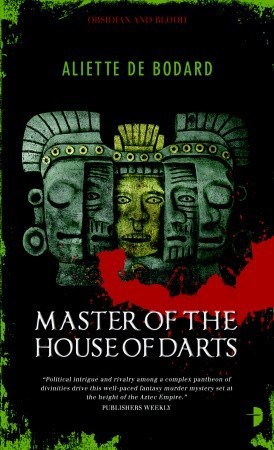
Aunque la resolución del libro me parece un poco “tramposa” y le falta algo que no sabría definir muy bien para alcanzar el nivel del anterior, es un libro muy recomendable. Y no habrá de pasar mucho tiempo hasta que lea el siguiente, “Master of the House of Darts”.

NOTA: Os recomiendo encarecidamente la lectura de la traducción que Marcheto ha hecho en  Cuentos para Algernon (nominado a los Ignotus) de la introducción al “Universo de Xuya” en el que se encuadran estos libros. Hará que los disfrutéis mucho más.

Libro gratis: Tainaron

Solo durante el día de hoy, los Vandermeer están ofreciendo gratis el libro “Tainaron”, de la escritora finlandesa Leena Krohn, como apoyo a la candidatura de Helsinki para que la Worldcon 2015 tenga lugar allí.

Puedes ver cómo conseguirlo en este enlace.

Nominados a los WSFA Small Press Awards

Se han anunciado los finalistas a los WSFA Small Press Awards dedicados a la ficción especulativa en formato corto publicada por editoriales independientes. Son los siguientes:

“Astrophilia” de Carrie Vaughn, publicado en Clarkesworld Magazine, editado por Neil Clarke (Julio 2012).

“The Bookmaking Habits of Select Species” de Ken Liu, publicado en Lightspeed Magazine, editado por John Joseph Adams (Agosto 2012).

“Bottled Spirits” de Pamela K. Kinney, publicado en Buzzy Mag, editado por  Laura Anne Gilman (Junio 2012).

“Coca Xocolatl” de Lawrence M. Schoen, publicado en ReDeus: Divine Tales, editado por Robert Greenberger y Aaron Rosenberg (Crazy Eight Press 2012).

“Good Hunting” de Ken Liu, publicado en Strange Horizons, editado por Brit Mandelo (Octubre 2012).

“Mornington Ride” de Jason Nahrung, publicado en  Epilogue, editado por Tehani Wessely (Fablecroft Publishing Junio 2012).

“The Six Million Dollar Mermaid” de Hildy Silverman, publicado en Mermaids 13: Tales from the Sea, editado por John L. French (Padwolf Publishing Inc. Diciembre 2012)

Os he puesto los nominados que  están disponibles online para que os hagáis una idea. Yo nominé “Astrophilia” para los premios Hugo, así que os la recomiendo especialmente.

Ganadores Science Fiction and Fantasy Translation Awards

El fin de semana pasado se anunciaron los ganadores, así como las menciones honoríficas; de los Premios de Traducción de Ciencia Ficción y Fantasía. Es importante reconocer la labor de las personas que permiten que leamos las obras de los idiomas que no conocemos.

Ganador formato largo

“Atlas: The Archaeology of an Imaginary City” de Kai-cheung Dung, traducido del chino por Anders Hansson, Bonnie S. McDougall, y el autor (Columbia University Press)

Menciones honoríficas formato largo

“Belka, Why Don’t You Bark?” de Hideo Furukawa, traducido del japonés por Michael Emmerich (Haikasoru)

“Kaytek the Wizard” de Janusz Korczak, traducido del polaco por Antonia Lloyd-Jones (Penlight)

“Roadside Picnic” de Arkady y Boris Strugatsky, traducido del ruso por Olena Bormashenko (Chicago Review Press)

Ganador formato corto

“Augusta Prima” de Karin Tidbeck, traducido del sueco por la autora (Jagannath: Stories, Cheeky Frawg)

Menciones honoríficas formato corto

“Every Time We Say Goodbye” de Zoran Vlahović, traducido del croata por Tatjana Jambrišak, Goran Konvićni, y el autor (Kontakt: An Anthology of Croatian SF, Darko Macan y Tatjana Jambrišak, editores, SFera)

“A Hundred Ghosts Parade Tonight” de Xia Jia, traducido del chino por Ken Liu (Clarkesworld #65)

“A Single Year” de Csilla Kleinheincz, traducido del húngaro por el autor (The Apex Book of World SF #2, editor Lavie Tidhar, , Apex Book Company)

¡Enhorabuena a los ganadores!

Interview with Max Gladstone

Some days ago we published the review of “Three parts dead” by Max Gladstone and today we bring you an interview with him. The interview is very interesting, hope you enjoy it!. You can read this entry in Spanish.

When did you know you wanted to become a writer? Which other authors have influenced you? Is there any current writer that you admire?

Right in with the easy questions, I see!  I’ve always loved storytelling.  Writing has let me tell stories at my pace, which is fast.  I was trying to write before I could talk—my parents remember me scribbling inside the lines of their notebooks.  My first favorite toy was a toy car, but my next was an old travel typewriter.  I loved the feeling of striking keys.

As for author influences, Roger Zelazny is a huge one.  I’ve read his book “Lord of Light” about twenty times, and basically everything else he’s written, though I’m still working my way through his short fiction.  Other immensely important writers for me growing up include Robin McKinley, Ursula K Leguin, Dorothy Dunnett, and, honestly, William Shakespeare.

As for current writers—some of the writers on the list above still live, so they count.  Also, while I didn’t find John Crowley‘s writing until college, when I did, it impressed me immensely.  “Little, Big” is both The Great American Novel and The Great American Fantasy Novel.  I don’t know anyone else who can make that claim.

Why did you choose to study Chinese? What can you tell us about your life there, especially  in the Xiuning Middle School?

I started to study Chinese because, after a trip there in high school to study taiji, I was awed by the sheer amount of material there was to the language and culture.  I could study it for my entire life and barely scratch the surface.  What I didn’t really understand at the time, was that I could study it my entire life and barely scratch the surface!  Fortunately I learned some amazing things in the process of barely scratching the surface.

AnhuiXiuning Middle School is a tiny magnet middle school in the middle of southern Anhui, which is tea country.  The village across the street from the middle school had a few hundred people, and the nearest larger town was about ten minutes’ fast bike ride away.  Outside of that, around us we had tea and canola fields, and water buffalo.  Misty mountains in the distance.  Chickens everywhere.  Enterprising rats in the fields, Odin the One-eyed Cat guarding the trash heap behind the school, egret swarms in spring (chased off the school grounds by hirelings with illegal guns), Ming-dynasty watchtowers leaning over to fall, and of course classes full of some of the brightest young students who have ever been forced through a disgustingly intense standardized testing regime.  Teachers struggling to teach under the same sick testing mandates.  Communist Party officials hanging around challenging us to drinking contests.  And wherever I went, being instantly recognized, since our arrival was televised—even if the Stars Align and I suddenly catapult to JK Rowling levels of success I never will be so singled out as I was on any given Xiuning streetcorner.  Wherever I went in school, students following me with cries of “Hello, MAX!”  Teaching students the Twist at New Year’s Eve parties.  Hearing about kids’ hopes for their lives; introducing some to rock & roll.  Coming home one day to find our house draped in banners and covered in graffiti saying ‘TIBET IS AN INDISPUTABLE PART OF CHINA.’  I could write books and books about those two years.  Maybe one day I will.

What do you think of the current situation of science fiction and fantasy in China? I have read Cixin Liu’s short stories and think they’re great. Are there more authors that need to be translated?

ciulixinEmbarrassing confession time: I’m not very up on Chinese genre fiction outside of the great classics of Wuxia, the home-grown historical kung fu mythosphere that more than matches the Knights-and-Wizards Western European mythosphere for quantity and quality of writing.  Genre is a cult of secret knowledge in all meridians—people rely on local masters (of whatever gender) to tell them what they should be reading.  I never found someone to do that for me in China, so I’m restricted to the big names like Liu Cixin.  If you find Jin Yong’s novels in translation, read them.  There are good (and recently reworked) translations of Journey to the West, which if you’re a fantasy fan and you haven’t yet read I suggest you rectify that at your earliest opportunity.  But modern stuff, I’m as in the dark as anyone.  I appreciate any recommendations!

Have you read Barry Hughart’s stories placed in China (such as Bridge of Birds)? What do you think about them?

I’ve only read “Bridge of Birds” a few months back, and I loved it so much I’m saving the rest for some day when I really, really need a good new book.  Amazing.  I have no idea how “Bridge of Birds” is as good as it is.  It has no right to be.  It’s a surprise and a gift.  The only weakness I can think of is that it’s a little short on female characters, but for a book that revolves around boys, men, power, and growth, and the ways these things can inflict terrible damage on the world in general and women specifically, maybe that’s not a surprise.  Anyway.  He’s great.

How did you work with the idea of mixing magic, economy and law in “Three parts dead”?

With great difficulty!

No, seriously, they all go together so well.  Law and economy is easy—there’s a whole school of legal thought called “law and economics” for that reason.  And then, well, magic.  On the one hand we have transactions of invisible power that affect the spiritual environment and rely on the faith of all those concerned, and on the other hand we have… economics.  Meanwhile, law and magic both use dead languages (and ancient civilizations!), contracts, bargains, loopholes, confrontations, human sacrifice, and mountains upon mountains of books.  They married quite well together.

Have you ever been contacted by some Spanish publisher to translate your books?

No, but I’m interested!  Let me know! 

What can you tell us about your new projects?

twoserpents_The next book, “Two Serpents Rise”, is set in the same world as “Three Parts Dead”.  Decades after a desert city kicked out its gods, they’re struggling on the edge of survival.  Someone’s poisoned their water supply, and Caleb, risk manager and descendant of the banished high priests, needs to figure out why, and stop them.  Chinatown meets Legend of Korra in Aztec-influenced psudoLA.  Kinda sorta.

Are social networks important for you relationships with other authors and with your readers?

 I like my social face to face, but I’m slowly learning the ropes of social media.  The catch is that, of course, I want to spend most of my time writing—and twitter pings & the like do interrupt the flow.

Does fencing help you with action scenes?

Yes, ish.  Fencing, like any martial art, controls its conditions.  You’re on a ~2m wide strip, about 14m long, and your strikes score under particular circumstances—so if you try to craft realistic fight scenes with fencing as your sole referent, you’ll get a lot wrong.  That said, fencing is a great way to learn the experiences of time dilation, of decision-making under pressure, of threat and compensation, ambition and danger, and the sleight-of-hand of combat, without actually going out and getting into fights.  i’ve trained in a number of martial arts, and in some ways they’re all useful for action scenes, but only when I roll them together with the straight-up fistfights I got into as a kid, and the few-pads sparring I tried later.

I wish to thank again Max for his answers and recommend you his book “Three parts dead”.

UPDATE: Somehow we lost one question. Here it is.

How do you document yourself?

I use a lot of different sources when I’m researching a book.  Wikipedia is a good start, but only if you know where to look, and even then, there’s a lot of context you can’t get from an article.  I’m fortunate to live in a place with a great public library ILL system, which is a lifesaver for research projects; good used bookstores can also turn up surprising details and new bits of knowledge.  Still, there’s a limit to the written word.  At some point you have to talk to people.  That’s the best way to get the story through their eyes.