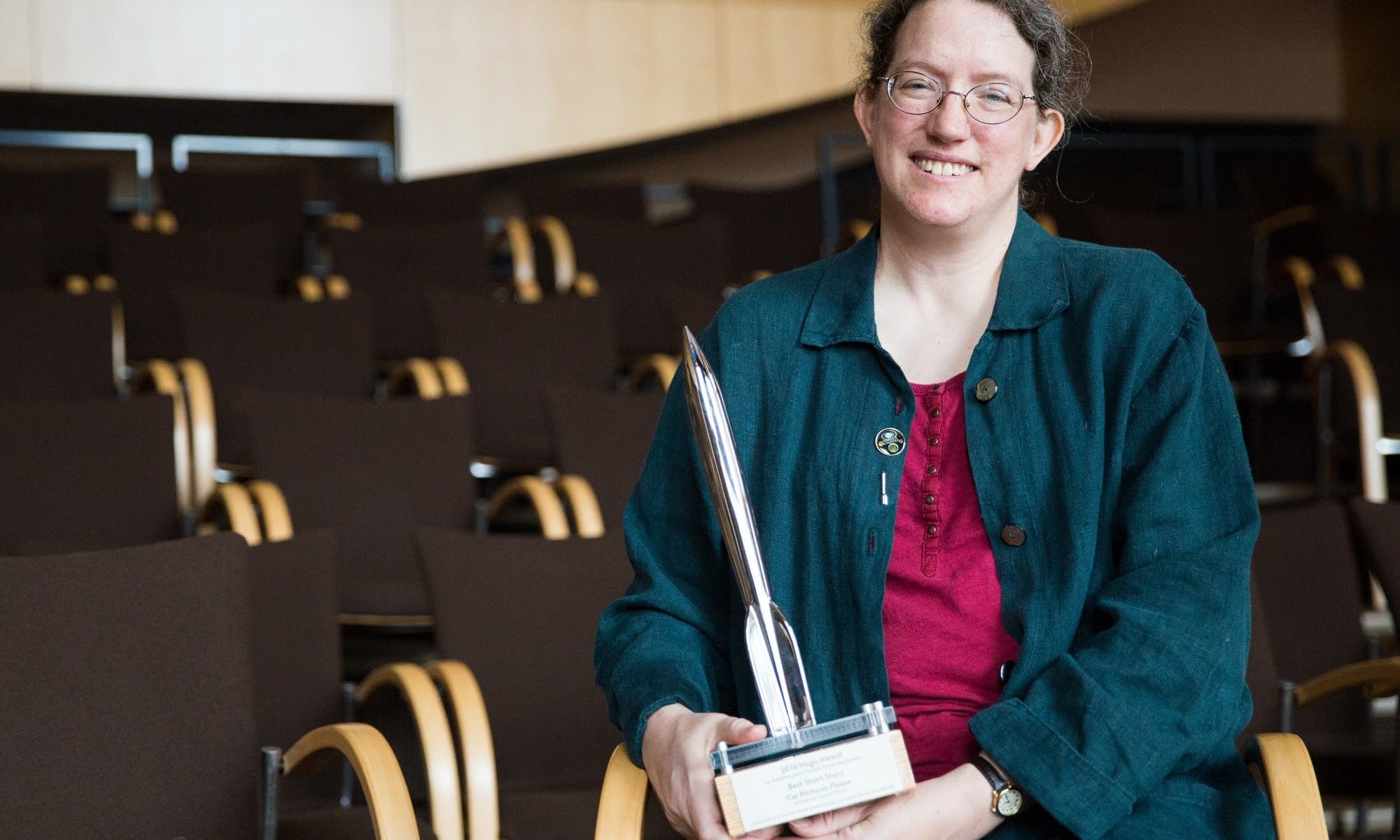
Es todo un placer colaborar con Marcheto de Cuentos para Algernon, pero aún más ha sido entrevistar a un escritora tan interesante como es Naomi Kritzer. Espero que os interesen sus respuestas, que dejan entrever la mente de una autora que merece ser más conocida. Al final de la página podréis leer la entrevista en el inglés original.
¿Se ha puesto en contacto contigo alguna editorial española para traducir tus libros? ¿Cómo venderías CatFishing on Catnet en nuestro país?
Ninguna editorial española se ha puesto en contacto conmigo. Mi slogan para CatFishing on Catnet sería: “Todos los amigos de Steph están en internet porque lleva toda su vida mudándose, los amigos de CheshireCat están en internet porque son Inteligencias Artificiales ejecutándose en un ordenador. CheshireCat descubre el secreto de Steph justo a tiempo para salvarle de su peligroso padre, Steph descubre el secreto CheshireCat justo a tiempo para viajar para salvarla de su creador .”
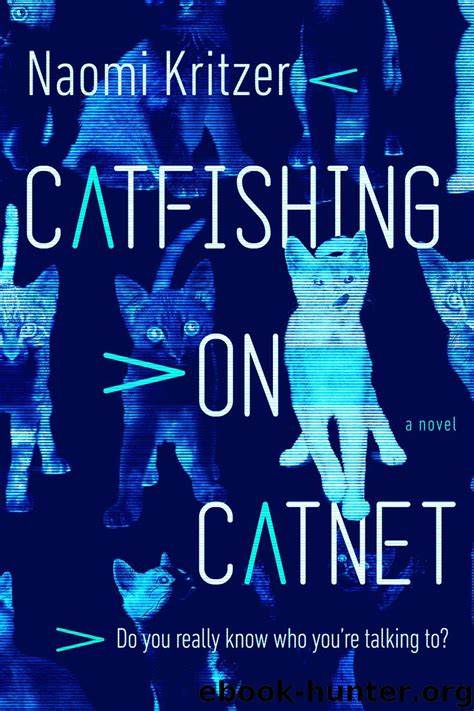
CatFishing on Catnet retoma la historia de “Cat Pictures Please”. ¿Qué puedes decirnos sobre el siguiente libro de la serie? ¿Por qué decidiste escribir una novela juvenil con esta inteligencia artificial como protagonista?
¡Escribí la novela porque había un editor que la quería! Tengo cinco libros publicados a principios de los 2000 pero llevo años intentando vender más novelas de ficción. Cuando “Cat Pictures Please” ganó el Hugo, conseguí un agente y también tenía otra novela juvenil sin publicar que estaba moviendo. Este editor se interesó mucho con la perspectiva de un libro mío, pero lo que realmente quería era más contenido sobre la Inteligencia Artificial del relato y a mí me encantó poder explorar más ese universo.
El final de CatFishing on Catnet apunta a la existencia de una segunda inteligencia artificial. De hecho, existe esa otra IA y aparece en el segundo libro. Más cosas que salen en el segundo libro: una joven que ha sido criada por una secta apocalíptica, un conjunto de juegos de móvil que son como Facebook pero aún más aterradores y más intrusivos que Pokemon Go, y un rescate en invierno de la sede de una secta.
Volviendo a hablar de las inteligencias artificiales de las historias, ¿cómo defines qué personalidad tendrá? ¿La tratas como un personaje humano más?
La IA del relato es inherentemente buena pero demasiado ingenua y al desarrollar la IA de la novela intenté expandir este tema. Tiene una gran cantidad de conocimientos, pero no tiene la comprensión necesaria para aplicar el conocimiento a situaciones nuevas, lo que hace que se parezca y se diferencie de un adolescente. Siempre he tenido en cuenta que las experiencias de la IA son todas digitales, así que todos los impulsos sensoriales que son tan importantes para los humanos para ella son incomprensibles. (El segundo libro tiene unos párrafos de la IA sobre la alimentación, y cómo obviamente es muy importante para los humanos comer, pero… ¿por qué algunas comidas son deliciosas y otras no? La decisión entre ambas categorías le parece increíblemente arbitraria, la inteligencia artificial es incapaz de comprenderlo).
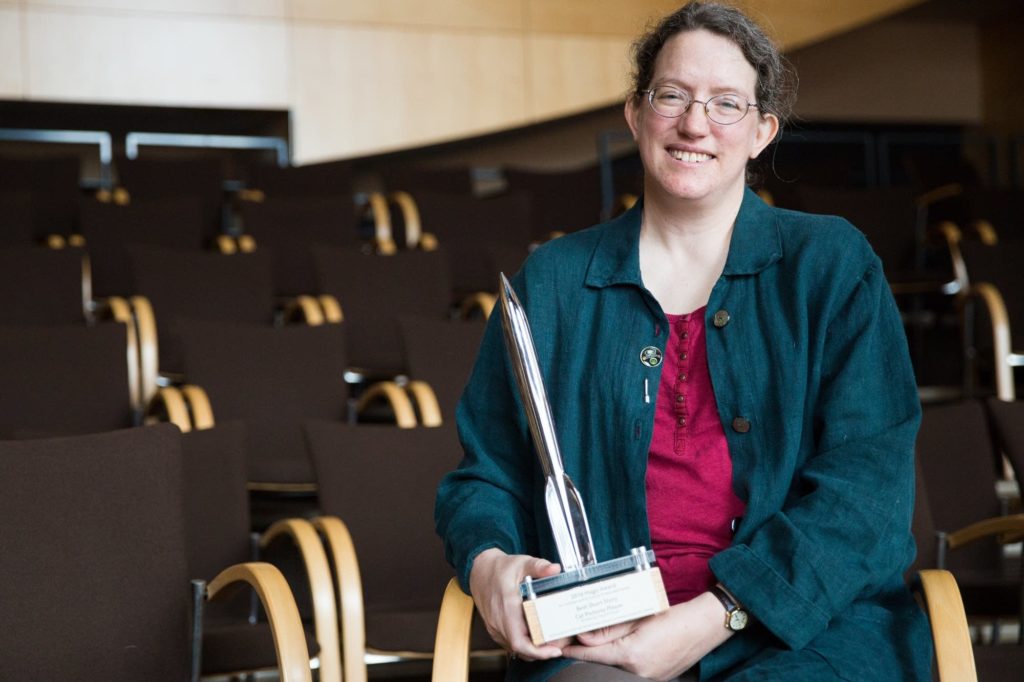
Ganaste el premio Hugo con tus relatos cortos y el premio Lodestar (ese que no es un Hugo) con CatFishing on Catnet. ¿Qué significó para ti recibir estos galardones?
Ganar un premio sirve para que te sientas respaldada, ya que son un honor. Me hace muy feliz que la gente me lea y le encante lo que escribo. ¡Me alegró muchísimo recibir el Lodestar!
A veces los premios solo implican eso, pero no exagero nada si digo que ganar el premio Hugo cambió mi vida. En la WolrdCon hablé con un editor que publica antologías de relatos cortos y tras la convención me dijo que le encantaría publicarme una antología. Me he autopublicado dos antologías, pero no han vendido muy bien, esta otra colección ha ido bastante mejor, pero también ha hecho que mi obra llegue a mucha más gente de la que nunca creí que podría llegar, consiguiendo abrirme más puertas. Tras ganar el Hugo volví a tener agente y vendí una novela, lo que implicó ganar otro premio.
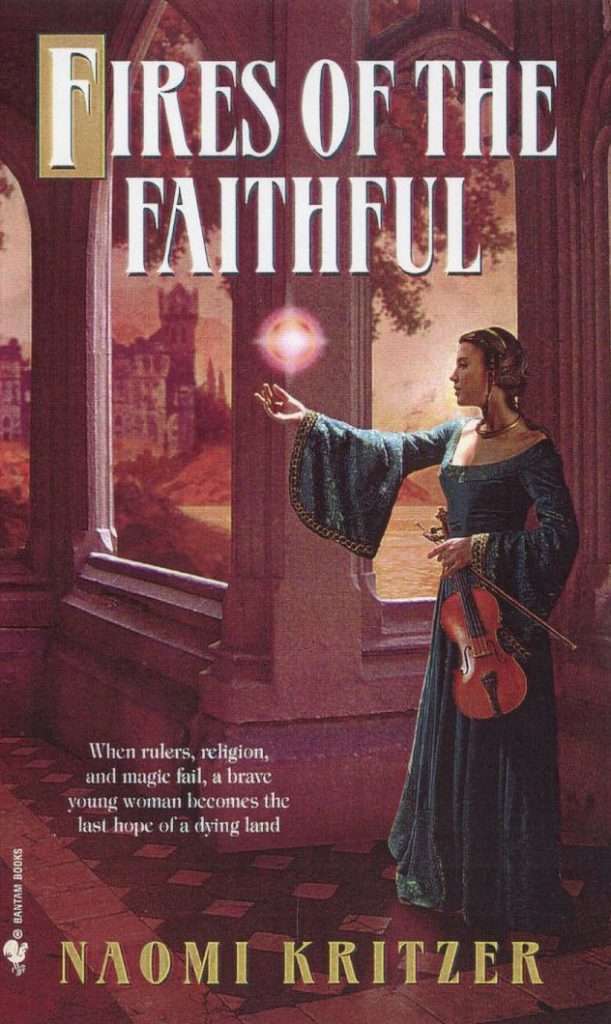
A pesar de que has publicado varias novelas, quizá eres más conocida por tus relatos cortos. ¿Trabajas de manera distinta dependiendo de la longitud de lo que escribes?
Escribir una novela y un relato son cosas distintas. En la novela tienes mucho más espacio. Puedes hacer que las relaciones evolucionen poco a poco, puede dedicar tiempo para que el lector vea cómo son los personajes, puedes tener un robot hackeado y una persecución en coche y un viaje. Los relatos cortos son como abrir una ventana para que la gente vea una habitación. Una novela es como mudarte durante un mes a esa casa.
Algunos de tus relatos están relacionados con los cuentos de hadas de toda la vida. ¿Es difícil buscar un nuevo giro en estas historias ya conocidas o quizá resulta más fácil escribirlas porque es un terreno conocido?
Siempre me han encantado los cuentos de hadas y las nuevas versiones de estos mismos cuentos. (Me encanta Beauty de Robin McKinley, por ejemplo). Pero solo escribo este tipo de historias si creo que puedo añadir algo nuevo. Muchos de estas fábulas siguen emocionando a la gente, pero creo que lo que obtienen de ellas va cambiando con los siglos.
En ficción, escribes fantasía y ciencia ficción. En no ficción escribes en tu blog sobre política. ¿Sobre cuál prefieres escribir?
¡Fantasía y ciencia ficción! Me divierto escribiendo sobre política pero no es lo mismo.
Algunas obras tuyas, como “The Thing About Ghost Stories”, tienen versión en audio. ¿Qué opinas sobre esta forma de leer (audiolibros, podcasts)?
Creo que es una buena idea pero casi no escucho ficción en audio. Se me va la cabeza. Con los podcasts, suelo escoger aquellos en los que puede divagar y no perder totalmente el hilo. Con la ficción, realmente necesito poder volver a las páginas anteriores para ver si me he dejado algo en el tintero.
¿Te gusta ir a festivales de literature como las Worldcons? ¿Qué prefieres hacer allí?
¡Me encantan los festivales! Lo que más me gusta es ir al bar o a otro lugar donde haya gente charlando y buscar un grupo en el que conozca a alguien pero no a todo el mundo y si les apetece unirme al grupo. Así puedo ver a gente a la que solo veo en los festivales y también conozco gente nueva.
¿Qué nos puedes decir sobre tus nuevos proyectos?
En estas semanas recibiré las pruebas de Chaos on Catnet. Todavía no he escrito la propuesta para mi nuevo proyecto largo, pero lo he estado pensando. También estoy trabajando en un nuevo relato, inspirado por una conversación con una amiga sobre las supersticiones sobre los bebés que nacen dentro de la bolsa. Hay gente que cree que si naces dentro del saco amniótico, puede ser vidente, algo que me parece meterle demasiada presión a un recién nacido. En fin, de eso va el relato corto.
De nuevo muchas gracias a Naomi Kritzer por responder a nuestras preguntas y a Marcheto por idear esta colaboración, que seguro que no será la última. A continuación, puedes leer la entrevista en inglés.
If you are able to, would you mind letting us know if you’ve ever been contacted by a Spanish publishing company to publish your books in translation? What would be your sales pitch for your CatFishing on Catnet in Spain?
I am not aware of any interest from Spanish publishing companies. My pitch for Catfishing on Catnet would be, “Steph’s friends are all on the Internet because she’s spent her whole life on the move; CheshireCat’s friends are all on the Internet because they’re a bodiless AI that lives in a computer. CheshireCat learns Steph’s secret just in time to save her from her dangerous father; Steph learns CheshireCat’s secret just in time to go on a road trip to save CheshireCat from their fearful creator.”
CatFishing on Catnet takes the AI from “Cat Pictures Please” and continues to tell its story. What can you tell us about the new book in the series? Why did you choose to write a YA novel with this AI?
I wrote a YA novel with the AI because there was an editor who wanted it! I had five books published in the early 2000s but had been struggling for years to sell more novel-length fiction. After “Cat Pictures Please” won the Hugo Award, I was able to get an agent again, and I had a different unpublished (in book form) YA novel that she was shopping around. This editor was really excited about the prospect of a book from me — but what she really wanted was more of the AI from the short story, and I was delighted by the opportunity to explore this world more.
The end of Catfishing on Catnet hints at the existence of a second AI. There is, in fact, a second AI, and that AI shows up in the second book. Also in the second book: a teenage girl who was raised in an apocalyptic cult, a bunch of phone-based games that are like if Facebook at its creepiest and most intrusive were also Pokemon Go, and a midwinter rescue from a cult compound.
Talking again about the AI in these stories, how do you decide which personality it will have? Did you work with it in the same way you work other “human” characters?
The AI in the short story is good-hearted but extremely naive, and in writing the AI in the novel I tried to expand on that. The AI has a vast array of knowledge but not necessarily the understanding necessary to apply the knowledge to new situations — which makes them both like, and unlike, many teenagers. I always tried to bear in mind that the AI experiences the world digitally, so there is sensory input that’s extremely important to humans that the AI does not understand at all. (The second book has a digression from the AI about eating, and how obviously it’s very important for humans to eat, but why some foods are widely regarded as “delicious!” while others are widely regarded as “disgusting!” seems incredibly arbitrary; the AI doesn’t understand this at all.)
You have won the Hugo award with your short stories and the Lodestar “Not a Hugo” award with CatFishing on CatNet. What did it mean to you to win these awards?
One thing about winning an award is that it’s incredibly validating. Awards are an honor. It makes me really happy to know that people read my work and loved it. I was over the moon about the Lodestar Award!
Awards don’t always mean more than that, but I’m not exaggerating when I say that winning the Hugo for the short story changed my life. At that WorldCon, I chatted with an editor who publishes short story collections, and he followed up after the con to say that he’d love to publish a collection of my stories. I’d self-published two digital collections, but they’d never sold particularly well; the small-press collection has sold much better, but also it’s made its way to people I never would have expected, which has opened some amazing doors for me. After I won the Hugo, I was able to get an agent again, and sell a novel again (which went on to win awards).
Even though you have published several novels, you’re maybe best-known for your short fiction. Do you use a different approach depending on the length that you are writing?
Writing a short story and a novel is definitely different. You just have more space in a novel. You can do slow-burn relationships, you can take your time showing the reader who people are, you can have a hacked robot and a car chase and a road trip. Short stories are like opening a window so people can see into one room. A novel is like letting someone move into a house for a month.
Some of your short stories are related to the “old fairy tales”. Do you find it difficult to give another twist to these known stories or maybe it is easier to write about them because is known ground?
I have always loved fairy tales and fairy tale retellings, since childhood. (I adored Beauty by Robin McKinley, for example.) I basically only write them if I’ve got some idea that I feel like genuinely adds something new. A lot of these stories seem to continue speaking to people, but I think what people are getting out of them may shift over the centuries.
In fiction, you write fantasy and science fiction. In non-fiction you blog about politics. Which of these themes do you prefer to write about?
Fantasy and science fiction! I enjoy writing about politics but it’s definitely not the same.
Some of your stories, such as “The Thing About Ghost Stories”, have been performed in podcast. What do you think about this way of reading (audiobooks, podcasts)?
I think it’s great but I mostly can’t listen to audio fiction. My mind wanders. With podcasts, I tend to pick podcasts where I can wander off and back and not completely lose the thread — with fiction I really need to be able to flip back a page if I realize I’m missing something.
Do you like going to literature festivals like Worldcons? What do you prefer to do in these places?
I love conventions! My favorite thing to do is go to the bar (or some other place that people are hanging out) and look for a group of people where I know some of the people at the table but not all of them, and see if they’re amenable to me pulling up a chair. I like seeing some of the people I only get to see a conventions; I also like meeting new people.
What can you tell us about your new projects?
I’ll be getting the copyedits for Chaos on Catnet sometime this week. I haven’t yet written a proposal for my next novel-length project but I’ve been thinking about it. I’m also working on a new short story, inspired by a conversation with a friend about superstitions regarding babies “born in the caul” (born inside the amniotic sac). There are people who believe that if you’re born in the caul, you’ll be clairvoyant, which strikes me as a lot of pressure on a kid! Anyway, that’s kind of what the short story is about.